When I was a kid, my mother used to talk about Comet Halley, which appears at every 76 years. Thus, I always dreamt of seeing a big, bright comet. But Halley in 1986 was a total flaw. After that, I thought that I would never see a comet with my own eyes. Not until Neowise, the first comet that I photographed, back in 2020, which was a mind blowing experience. And now, we have the C/2023 A3 (Tsuchinshan-ATLAS). I’m starting to feel that I’m lucky.
—
Quando eu era criança, minha mãe falava sobre o Cometa Halley, que aparece a cada 76 anos. Assim, sempre sonhei em ver um cometa grande e brilhante, mas o Halley de 1986 foi uma decepção total. Depois disso, pensei que nunca mais veria um cometa com meus próprios olhos. Foi assim até o Cometa Neowise, o primeiro que fotografei, no ano de 2020, uma experiência alucinante. E agora, temos o C/2023 A3 (Tsuchinshan-ATLAS). Estou começando a achar que estou com sorte.

(Comet Neowise, back in July 2020; with a camera and a tripod; four images stacked)
Lucky or not, astrophotography is a rewarding but, at the same time, demanding pursuit. It requires significant investment in both time and resources. It involves technical expertise, artistic vision, and a healthy dose of patience.
This kind of photography can become quite technical, and one must not forget also its art components. After all, what would be the point of so many people shooting the same celestial objects if they would look the same in the end? With this in mind, I always try to achieve something different with my astrophotography.
—
Com sorte ou não, a astrofotografia é uma atividade gratificante, mas exigente. Requer um investimento significativo de tempo e recursos. Envolve conhecimento técnico, visão artística e uma boa dose de paciência.
Este tipo de fotografia pode ficar bastante técnico, e não se pode esquecer também de seus componentes artísticos. Afinal, qual seria o sentido de tantas pessoas fotografando os mesmos objetos celestes se eles ficassem todos iguais no final? Com isso em mente, sempre tento obter algo diferente com minha astrofotografia.
The Hunt Begins: Planning the Perfect Shot (although “perfect” is relative…)
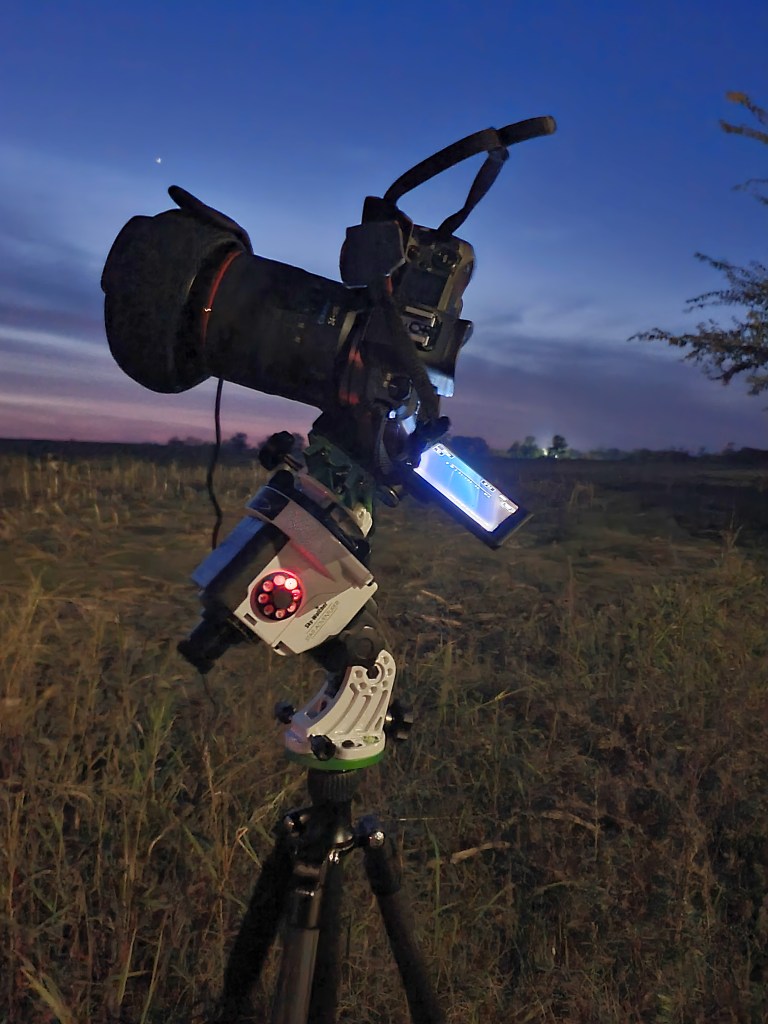
As soon as I added the comet’s coordinates to the app Stellarium in order to see its position in the sky, I started planning the shooting sessions. Basically, I had to: i) choose the appropriate camera gear; ii) find a suitable location (25-minute drive); iii) check the weather; iv) prepare the clothing (temperatures around 8 degrees Celsius). It may look simple, but it took me good few hours to have all this settled just before making the first picture.
—
Adicionei as coordenadas do cometa no aplicativo Stellarium para poder ver a posição dele no céu e comecei a planejar as sessões de fotografia. Basicamente, eu tinha que: i) escolher o equipamento fotográfico adequado; ii) encontrar um local apropriado (25 minutos de carro); iii) verificar o clima; iv) preparar a roupa (temperaturas em torno de 8 graus Celsius). Pode parecer simples, mas levei algumas boas horas para ter tudo isso resolvido antes de tirar a primeira foto.


The Achievements: Results and Revelations
For the lack of time and excess of clouds, I had four attempts at shooting the comet in mid-October 2024, in Budapest, Hungary. Overcast skies sabotaged my first attempt. One must deal with frustrations when it comes to astrophotography: in most cases, chances are that we will not easily get what we want. But when we get it, man, it’s total happiness. I finally managed to get images on 16, 19 and 27 October 2024.
—
Por falta de tempo e excesso de nuvens, fiz quatro tentativas de fotografar o cometa em meados de outubro de 2024, em Budapeste, na Hungria. O céu nublado sabotou minha primeira tentativa. É preciso lidar com frustrações quando se trata de astrofotografia: na maioria das vezes, é provável que a gente não consiga facilmente o que a gente quer. Mas quando conseguimos, cara, é pura felicidade. Por fim, consegui fazer fotos em 16, 19 e 27 de outubro de 2024.

(The comet A3 looked big in the sky, but barely visible with the naked eye on a light polluted sky; single shot, camera+50mm lens+tripod)
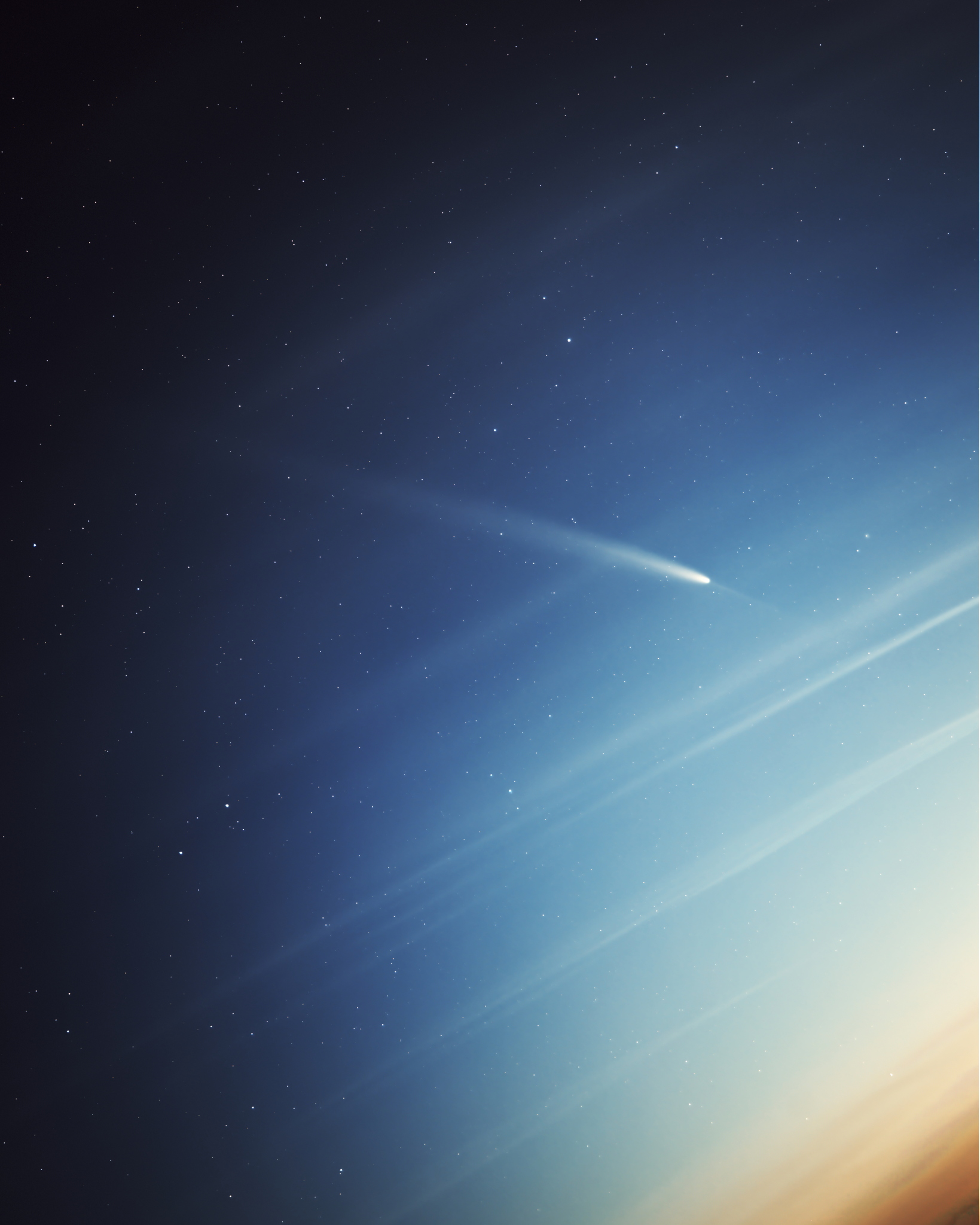
(Stack of four 2-minute images. Notice the anti-tail right in front of the comet; camera+star tracker)
The image above was the best one that I made, in my opinion. I love the sunset colors fading into the dark starry sky, together with the bright comet tail and its shy anti-tail. It’s not only about registering a celestial object, but also creating a unique and inspiring view of the universe.
Comet A3 displayed a unique feature, an anti-tail, an optical illusion created by Earth’s position relative to the comet’s orbit. As the comet moves, it leaves a trail of dust particles. When Earth crosses the comet’s orbital plane, we see these particles edge-on, creating the illusion of a tail pointing towards the Sun. The anti-tail lasts just a few days, so I am happy to have it registered.
—
A imagem acima foi a melhor que fiz, na minha opinião. Adoro as cores do pôr do sol se desvanecendo no céu estrelado escuro, junto com a brilhante cauda do cometa e sua tímida anti-cauda. Não se trata apenas de registrar um objeto celeste, mas também de criar uma visão única e inspiradora do universo.
O Cometa A3 exibia uma característica única, uma anti-cauda, uma ilusão de óptica criada pela posição da Terra em relação à órbita do cometa. À medida que o cometa se move, ele deixa um rastro de partículas de poeira. Quando a Terra cruza o plano orbital do cometa, vemos essas partículas de perfil, criando a ilusão de uma cauda apontando para o Sol. A anti-cauda dura apenas alguns dias, tive sorte de tê-la registrado.

(Single shot, 2-minute exposure; camera + star tracker)
When life gives an astrophotograper’s lemons (clouds), they make lemonade. On the image above, I can imagine the comet on a distant galaxy, gearing quickly towards the thin atmosphere of another planet, like in a sci-fi film. Of course, this is only my imagination, but it’s fun, isn’t it?
—
Como diz o ditado em inglês, se a vida te der limões (nuvens), faça uma limonada. Na imagem acima, imagino imaginar o cometa em uma galáxia distante, acelerando rapidamente em direção à atmosfera tênue de outro planeta, como em um filme de ficção científica. Isso é apenas minha imaginação, mas é divertido, não é?

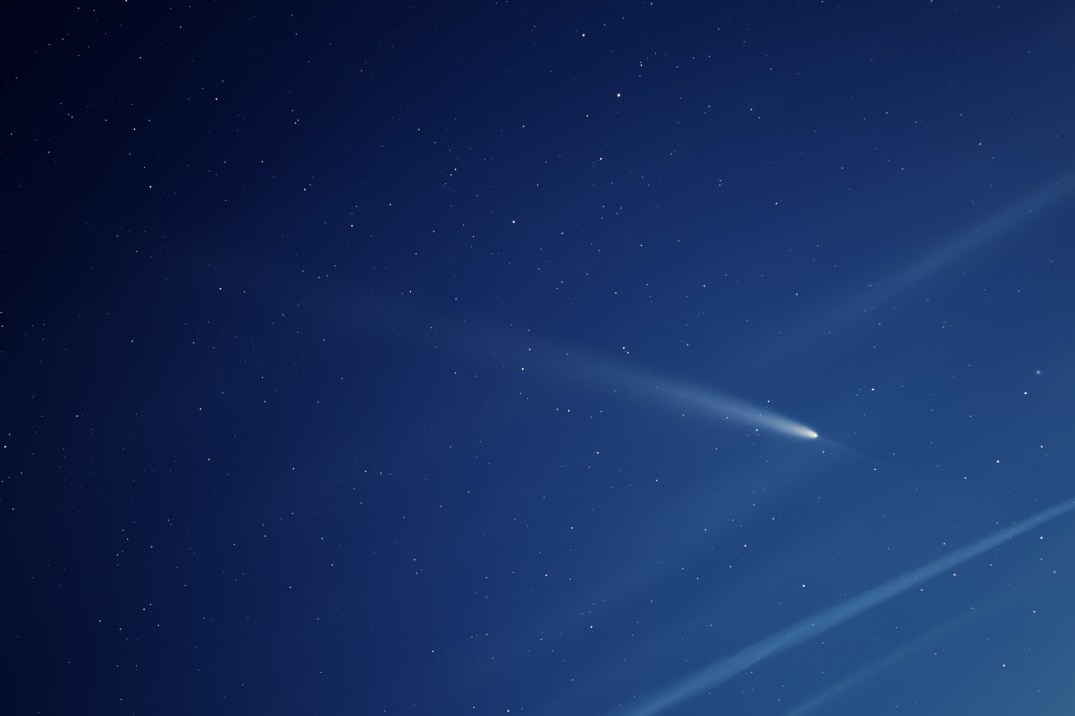
(Stack of three 2-minute images; camera + star tracker)
Changing the perspective can also change the meaning of an image. On the photograph above, does it look like something falling from the sky?
Comet A3 is now fading steadily every day. On my last attempt to photograph it, on 27 October, I opted to get closer, as in the image below. We can see its translucent tail revealing tiny stars in the background. The anti-tail wasn’t visible anymore. If we pay attention, we can notice a soft, green glow of gases closer to its nucleus.
—
Mudar a perspectiva também pode mudar o significado de uma imagem. Na fotografia acima, não parece que algo está caindo do céu?
O Cometa A3 agora está diminuindo o bilho a cada dia. Na minha última tentativa de fotografá-lo, em 27 de outubro, optei por uma visão mais próxima, como na imagem abaixo. Podemos ver a cauda translúcida, revelando pequenas estrelas ao fundo. A anti-cauda já não era mais visível. Se prestarmos atenção, podemos notar um brilho verde suave de gases, mais próximo de seu núcleo.
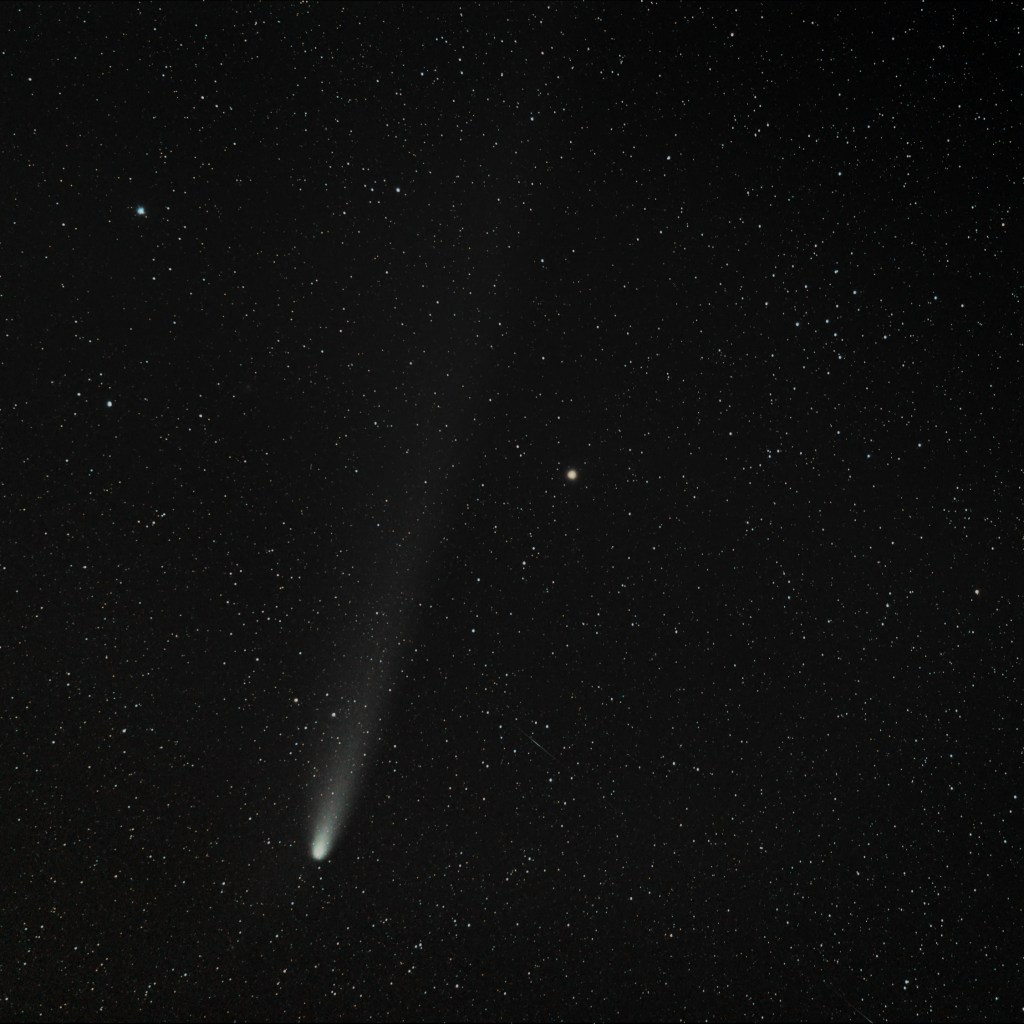
(Stack of eleven 30-second images at 312mm focal length, with darks, flats and bias calibration frames)
All in all, my journey started with unrealized dreams about a majestic appearance of Comet Halley. But it was with Comets Neowise and C/2023 A3 that my dream came true. As a kid, I had never imagined that I would be able to photograph the beauty of these enigmatic celestial objects. In a sense, things developed much better than the younger me could ever imagine.
—
No geral, minha jornada começou com sonhos não realizados sobre uma aparição majestosa do Cometa Halley. Mas foi com os Cometas Neowise e C/2023 A3 que meu sonho se tornou realidade. Quando criança, nunca imaginei que seria capaz de fotografar a beleza desses enigmáticos objetos celestes. De certa forma, as coisas foram acontecendo muito melhor do que a minha versão mais jovem poderia imaginar.
Behind the Lens: Technical Details for the Geeky
Gear:
Camera: full frame Canon EOS R
Lenses: Canon EF 50mm f/1.8, Canon RF 24-105 f/4L, Canon EF 100-400mmL Mk ii
Star tracker: Sky Watcher Star Adventurer
Other: tripod, lens heater
Software:
Stacking: Deep Sky Stacker
Editing: Affinity Photo (editing in 32 bits), using the amazing James Rittson’s astrophotography macros.
—
Equipamento:
Câmera: Canon EOS R full frame
Lentes: Canon EF 50mm f/1.8, Canon RF 24-105 f/4L, Canon EF 100-400mmL Mk ii
Star tracker: Sky Watcher Star Adventurer
Outros: tripé, aquecedor de lentes
Software:
Empilhamento: Deep Sky Stacker
Edição: Affinity Photo (edição em 32 bits), usando as incríveis macros de astrofotografia de James Rittson.
 Claudio Meluzzi