Rahat – short film/documentary

(tradução para o português abaixo)

My main focus here is photography and music. But this friend of mine one day suggested we make a short film together about the beautiful people of Bosnia and Herzegovina, and I accepted the challenge.

The process was simple: as expats living in Sarajevo, we’d go to the city streets and film the local people. We set very few boundaries, but one of them was perspective. We didn’t want the traditional “postcard” view where everything’s obvious about the place and its people. Instead, the idea was to zoom in and get a closer view of these particular humans. We made exceptions for very wide, aerial scenes, where we could give context to the location without being too obvious.

Through inspiring images and the narration of two Bosnian women from Sarajevo, the film explores the concept of “Rahat” and how it may be seen as one of the deepest characteristics of the Bosnian people. The streets of Sarajevo become our main stage, where we observe the characters – the ordinary people – and their interaction within the city.

The film flows through three main parts: a dark, tense beginning that captures the urban tension; an ethereal interlude where the concept of “Rahat” begins to unfold; and a final section with a brilliant sunset mood that conveys calmness and elevation of the soul.

Like street photography that captures the interaction between people and their urban environment, this 10-minute documentary takes you on a vivid walk through Sarajevo. The footage, captured in late 2019, was carefully selected to depict the beauty, happiness, and lightness of the Bosnian people at the beginning of the 21st century.

The soundtrack is central to the story. I composed it specifically for this film to fit the mood of the streets and the meaning carried by the word “Rahat,” and performed it entirely using a digital audio workstation.

Gear: APS-C camera, prime lenses (50mm, 100mm) and zoom lenses (55-250mm, 100-400mm), mobile phone camera, tripod and a drone. Film edited in DaVinci Resolve and music composed and played at FL Studio.

Meu foco principal aqui é fotografia e música. Mas um amigo um dia sugeriu que fizéssemos um curta-metragem juntos sobre o belo povo da Bósnia e Herzegovina, e aceitei o desafio.

O processo foi simples: como expatriados vivendo em Sarajevo, íamos às ruas da cidade e filmávamos as pessoas locais. Estabelecemos poucos limites, mas um deles era a perspectiva. Não queríamos a tradicional visão de “cartão postal” onde tudo é óbvio sobre o lugar e suas pessoas.

Em vez disso, a ideia era aproximar a câmera e ter uma visão mais próxima desses seres humanos em particular. Fizemos exceções para cenas muito amplas, aéreas, onde podíamos contextualizar a localização sem ser muito óbvios.

O filme flui através de três partes principais: um início escuro e tenso que captura a tensão urbana; um interlúdio etéreo onde o conceito de “Rahat” começa a se revelar; e uma seção final com um clima de pôr do sol brilhante que transmite calma e elevação da alma.

Como a fotografia de rua que captura a interação entre as pessoas e seu ambiente urbano, este documentário de dez minutos leva você a um passeio vívido por Sarajevo. As filmagens, captadas no final de 2019, foram cuidadosamente selecionadas para retratar a beleza, a felicidade e a leveza do povo bósnio no início do século XXI.

A trilha sonora é central para a história. Eu a compus especificamente para este filme para combinar com o clima das ruas e o significado carregado pela palavra “Rahat”, e a executei inteiramente usando uma estação de trabalho de áudio digital.

Equipamento: Câmera APS-C, lentes prime (50mm, 100mm) e lentes zoom (55-250mm, 100-400mm), câmera de celular, tripé e um drone. Filme editado no DaVinci Resolve e música composta e tocada no FL Studio.

Sunset Perspectives

The other day I was taking portraits of a friend, Renzo, and he said that he hates sunset photos. I found it curious and I agreed that most sunset photos might indeed be boring. I then started to think about my sunset images.

When I was a child, my father would let me use his Olympus Trip 35, a 35mm film camera, and make a few shots. He was very protective of his camera (as well as of his Ray-Ban glasses), so I had to take extra care. I mostly shot some landscape and, obviously, sunsets.

And then several other recent sunset images that I made came to my mind.

I added to Renzo, almost like an excuse, that I did shoot sunsets in the past, but I tried to make them different. The photo above, for instance, was made using a lot of zoom, so the Sun appears bigger than we normally see it. The picture is quite simple, but the birds and the boats add a slight movement to the scene, so we can perceive it as if we were there. I do enjoy this image, although it is just another sunset.

Renzo and I agreed that the quality of the light after the sunset is usually nicer than the sunset itself. And then this image below came to my mind. It’s a long exposure (actually, a few seconds), which made the clouds a bit messy. I like the dark sillouette of the rocks and the pink and blue colours. It’s a sunset without the sun and the usual yellow glow. Well, maybe I should call it non-sunset or post-sunset.

Outro dia, eu estava fazendo retratos do meu amigo Renzo, e ele disse que detesta fotos do pôr do sol. Achei curioso e concordei que muitas dessas fotos podem ser realmente sem graça. Então comecei a pensar nas minhas próprias imagens de pôr do sol.

Quando criança, meu pai me deixava usar sua Olympus Trip 35, uma câmera de filme 35mm. Ele tinha ciumes da câmera (assim como dos óculos Ray-Ban), então eu tinha que tomar muito cuidado. Fotografei principalmente paisagens e, obviamente, pores do sol.

Então várias outras imagens recentes que fiz de pôr do sol vieram a minha mente.

Quase como um pedido de desculpas, expliquei para o Renzo que eu já havia fotografado pores do sol no passado, mas que eu tentava torná-los diferentes. A foto acima, por exemplo, foi feita usando muito zoom, então o Sol parece maior do que normalmente o enxergamos. A imagem é bem simples, mas os pássaros e os barcos dão um leve movimento à cena, então podemos percebê-la como se estivéssemos lá. Eu gosto dessa imagem, embora seja apenas mais um pôr do sol comum.

Renzo e eu concordamos que a qualidade da luz após o pôr do sol costuma ser mais bonita do que o próprio pôr do sol. E então me lembrei dessa imagem aqui embaixo. É uma longa exposição (na verdade, de alguns segundos), o que deixou as nuvens um pouco mexidas. Gosto da silhueta escura das rochas e das cores rosa e azul. É um pôr do sol sem o sol e sem o brilho amarelo comum. Bom, talvez eu devesse chamá-lo de não-pôr-do-sol ou pós-pôr-do-sol.

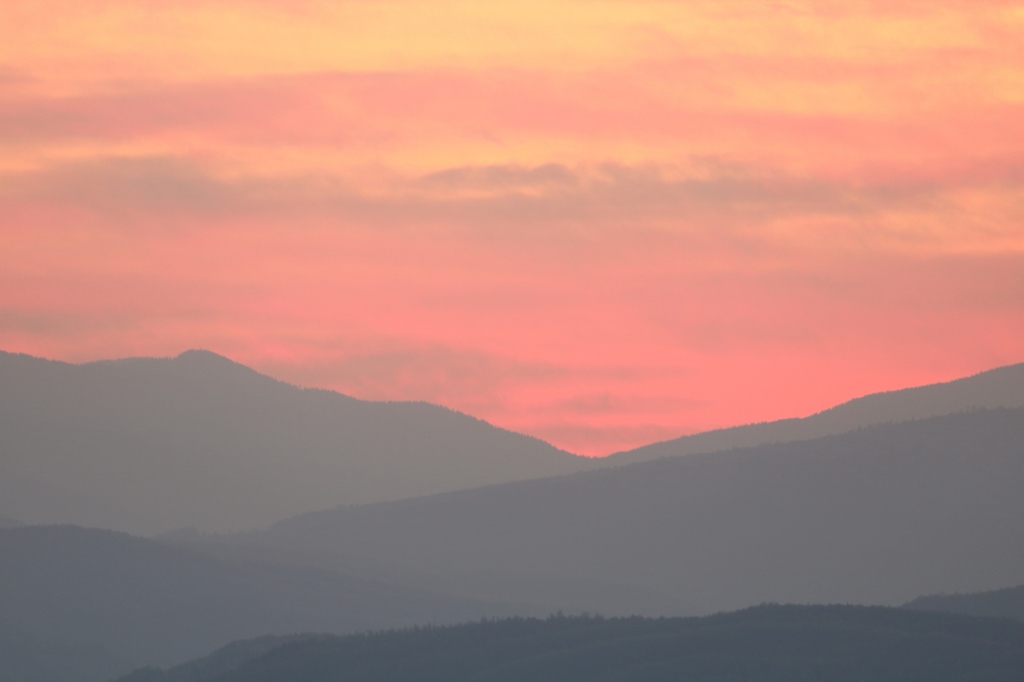
Definitely, a way of making sunsets photos less predictable is using zoom (or another unusual focal length) and not going for the obvious – the Sun setting. Like this photo below, which comprises layers of land, clouds and colours. Even though the colour pallete is warm, I think this image evokes peace and calm. Another non-sunset image.

Certamente, uma maneira de tornar as fotos do pôr do sol menos previsíveis é usar zoom (ou outra distância focal incomum) e não focar no óbvio – o sol se pondo. Como esta foto aqui embaixo, que mostra camadas de terra, nuvens e cores. Mesmo com a paleta de cores quente, acho que essa imagem evoca paz e calma. Acaba sendo mais uma imagem que não é exatamente o pôr do sol.

I think Renzo has a point. He hates sunset photos and this happens because we love sunsets. They’re an easy target for us photographers of any level. They usually provide contrast and a warm glow, which automatically makes the image more attractive. However, although all sunsets are not the same, they do look terribly similar.

The great challenge for us photographers (amateurs or pros) is to make our sunsets unique. Or, at least, less similar to all those that we’ve already seen.

Thank you, Renzo. After our talk, I’ll never manage to photograph a sunset again before thinking twice.

Renzo tem razão. O fato de ele detestar fotos do pôr do sol tem a ver justamente com o nosso fascínio por essa cena. Nós, fotógrafos de todos os níveis, acabamos vendo pores do sol como um alvo fácil. Eles costumam apresentar contraste e luz quente, tornando a imagem automaticamente mais atraente. No entanto, embora cada pôr do sol tenha suas particularidades, no fim das contas acabam sendo todos terrivelmente parecidos.

O grande desafio para nós fotógrafos (amadores ou profissionais) é tornar nossos pores do sol únicos. Ou, pelo menos, um pouco diferentes de todos aqueles que já vimos.

Obrigado, Renzo. Depois da nossa conversa, nunca mais vou conseguir fotografar um pôr do sol sem pensar duas vezes.